
The Life of a Showgirl: An Autopsy (Part 2)
ACTUALLY ROMANTIC through THE LIFE OF A SHOWGIRL


Hello! On the heels of the joyous Super Bowl halftime show by Benito Antonio Martínez Ocasio comes another rich cultural juggernaut of a text: Part Two of our Showgirl recap is here. Please welcome back Khalid bin Ya’qūb, co-host of the Subliminal Jihad podcast (you can’t really understand the Epstein Files until you’ve listened to a five hour SJ podcast episode about them). We are ecstatic to have Khalid returning to AB for part two of The Definitive Analysis of Taylor Swift’s 12th studio album, The Life of a Showgirl.
Part one is available to read here.
TRACK 7- ACTUALLY ROMANTIC
KbY: Now we enter the desert of b-sides.
So, “Actually Romantic” is a “diss track,” Taylor’s response to Charli XCX’s “Sympathy is a Knife.” Now, I don’t like Charli’s music, I hated every single song on brat, and I think it’s sus that she’s friends with Dasha. I even more or less believe that Charli instigated this feud. I mean, I do maintain that sometimes you simply can’t help disliking someone, and you have to express it, somehow, for your own sanity’s sake, politeness be damned— but, insofar as it was probably Charli who had that instinctual reaction to Taylor rather than Taylor to Charli, sure, I would guess Charli “started it.” Charli also, of course, wrote the first “diss track.” And yet… it’s shocking how Taylor fails, or refuses, to engage with the actual content of the song that ostensibly justifies her response. “Sympathy is a Knife” is about how being around Taylor triggers Charli’s intrusive, self-hating thoughts. She admits that these thoughts have partly to do with envy: “This one girl taps my insecurities… I couldn’t even be her if I tried.” She wrestles with her inability to suppress these feelings: “Why can’t I even grit my teeth and lie?” She expresses her pain in the strongest terms, talking of wanting to shoot herself and begging God to make it stop. I think it’s quite clear that this song is only incidentally an expression of dislike for Taylor personally, and it is certainly not just, as Taylor calls it, “a song saying it makes you sick to see my face”. Once upon a time, Taylor was able to muster grace for Kanye West after he publicly humiliated her in a fairly unambiguously out-of-pocket way (not to say that “Innocent” didn’t have its own problems)— but now she’s apparently cold to the pain of a colleague struggling through the anxieties that attend the “showgirl” life? It’s funny that Taylor has taken to describing herself, even in jest, as an “English teacher,” because here she displays a shocking lack of the one ability that above all distinguishes a good teacher of language and letters, which is to read (or in this case listen) with generosity and care. Who could fail to see that “Sympathy is a Knife,” despite its eponymous refrain, is a plea for sympathy? Charli admits, “I’m embarrassed to have it, but need the sympathy.” I’m conscious of the fact that my responses to a lot of the tracks on TLOAS amount to “what if Taylor had written a totally different song instead,” but… what if instead of this shitty, mean-spirited filler song, Taylor had answered Charli’s complaint that “all this sympathy is just a lie” with a song offering genuine sympathy? Instead she almost confirms that her pose as a supporter of women in her field is just a paper-thin façade, with a song so immature and vacuous as to merit the “Boring Barbie” epithet. Taylor brought it on herself, but it’s hard not to wince at the thought of Charli taking up the gauntlet with a response actually intended to be “vicious”; if she came at Taylor for real, she would probably tear her apart.
As to the actual reality of “Actually Romantic”—let’s take a moment of silence for the Gaylors, whose humiliation truly knows no end. In another context, a line like “no man has ever loved me like you do” could have sent shockwaves through Swiftiedom. Hilariously, Taylor Swift literally says that a woman is “making [her] wet” in this song, but everyone who hasn’t suffered a total break from reality recognizes that this is not a rejection of heteronormativity. It’s exactly the opposite; it’s schoolyard homophobia. This is probably the most homophobic Taylor Swift lyric since the first version of “Picture to Burn.” What’s more—I know “me and Taylor might still have sex” was not the line from Kanye’s “Famous” that bothered Taylor, but that line is misogynistic, and the logic of “Actually Romantic” mirrors it quite closely. Taylor might see a gendered dimension to, say, Scooter’s obsessive desire to own her masters, but would she joke that this was “making her wet”? Selective obliviousness.
I guess I like the instrumentation and production on this song. It has a good build. And I like the “shoo-bop-bop— romantic.” Don’t have anything else positive to say.
CD: Yeah, so my biggest problem with this song is that it hinges on the lame and homophobic punchline of, It’s kinda making me weeeet. Like the entire song is kind of structured around this line where queerness is treated like an a-ha moment. It’s actually romantic confusing that this is the same Taylor who wrote and recorded the song “You Need to Calm Down” and teased coming out as bisexual for the entire rollout of her album Lover. So at face value I can’t help but find this song cringe and sad. My hot take theory about “Actually Romantic” is that it’s actually a song about Olivia Rodrigo, disguised as a song about Charli, and that it’s actually crueler and more deranged than if it were solely a response to Charli’s “Sympathy as a Knife.” (If it is, though, I am in full agreement with you that Charli probably instigated the fight).
The reason why I think “Actually Romantic” might be about Olivia Rodrigo is that its homophobic flavor feels in direct conversation with Olivia Rodrigo’s “Lacy,” a song off GUTS, in which Olivia takes on the voice of someone obsessed by this woman named Lacy, whom she is jealous of, and whom she feels tortured by. The song begins like this:
Lacy, oh, Lacy, skin like puff pastry / Aren’t you the sweetest thing on this side of hell? / Dear angel Lacy, eyes white as daisies / Did I ever tell you that I’m not doing well?
The name Lacy— and the first image of her, “skin like puff pastry,” insinuates whiteness, as does her name... “puff pastry” also suggests a fragile or layered exterior. The song continues:
I see you everywhere... Taylor certainly is everywhere... Smart sexy Lacy, I’m losing it lately / I feel your compliments like bullets on skin / Dazzling starlet, Bardot reincarnate / Well, aren’t you the greatest thing to ever exist?
The speaker is suffering from some major paranoia here; she clocks Lacy’s kindness as fake, and her Pin-up, conventional looks as some sort of threat or affront. In the final verse, Rodrigo sings:
Lacy, oh, Lacy, it’s like you’re out to get me / You poison every little thing that I do / Lacy, oh, Lacy, I just loathe you lately / And I despise my jealous eyes and how hard they fell for you / Yeah, I despise my rotten mind and how much it worships you.
We know that Olivia Rodrigo is famously a Swiftie, and we also know that she and Taylor may have had a falling out over copyright lawsuits pushed by Taylor.
When GUTS came out a couple years ago some Livvies (Olivia fans) were taking this song as an admission of Olivia’s bisexuality… not sure that’s what I take away from this song, but the discourse around it must have been on Taylor’s radar. Olivia seems to inspire some sort of true agita in her— songs like “Clara Bow” make her jealousy of Olivia almost obvious— likely because Olivia is a formidable talent, good at singing, beautiful, and over a decade younger than Swift. In “Actually Romantic,” Taylor writes:
I heard you call me “Boring Barbie” when the coke’s got you brave / High-fived my ex and then you said you’re glad he ghosted me / Wrote me a song saying it makes you sick to see my face / Some people might be offended…”
I think “wrote me a song saying it makes you sick to see my face” might actually be in reference to the opening of “Lacy” and not a response to “Actually Romantic.” If Olivia is reaching into her Sapphic bag for “Lacy” it sounds like Taylor might be teasing her about this in a very, as you said, heteronormative way. Also, since O-Rod’s music has a rock edge and she has continued to go in that direction during her live performances (since has since collaborated with the Talking Heads, and performed with Jack White at the Rock n Roll Hall of Fame, I believe the Like a toy chihuahua barking at me from a tiny purse / that’s how much it hurts might be a way to sub her musical edginess. Even the coke line feels directed at O-Rod more than Charli. Yeah cocaine is very Charli, but Charli doesn’t seem like the type of person who would only be brave when she does coke— it makes more sense as a diss towards someone younger and more inexperienced. The orchestration of the song is also O-Rod’s mode—pop punk— so musically, the song aligns way more with an O-Rod diss than it does with Charli. This is perhaps a bad faith interpretation of the song, but the song itself is in bad faith.
I agree with you that the shoo-bop-bop romantic part is great though, and on this song more than the Travis songs, she actually sounds animated with eros!
TRACK 8- Wi$HLI$T
CD: Jeez, we’re really in the trenches now. Here is the Trad Wife song. On my first few listens through the album I liked this song a lot more than I do now. It’s really the most sincere songs on the album, and sincerity is when she’s best. She has already talked with Zane Lowe about this song being her favorite on the album. It’s a bit of a code switch, from Lover’s “The Man.” The sentiments she shares on this song are shocking, because this is someone who, for years, has been in relentless pursuit of everything she chides other people of wanting. The more you listen to this song, you realize it’s actually extremely cynical, because everything she mentions-- (They want that complex female character / They want that critical smash Palme d’Or / And an Oscar [de La Renta?] on their bathroom floor)— are things she’s wanted too, or has gotten already! That line “three dogs that they call their kids” is wild because Taylor has three cats, and everyone knows three cats are less work than three dogs. Maybe she is poking fun at her previous (current?) cat lady self here, but she is someone who is so protective over all her previous iterations of self (hello, Taylor’s Versions), so I took this to feel extremely disingenuous.
My next hot take is that this song is actually the Charli diss track. I think something about Charli climbing the pop star ladder with brat (as well as her connection to Matty Healy, she is married to his bandmate after all) pissed her off, and this might be Taylor’s response to Charli’s “I Think About It All the Time,” in which she wonders if having a kid would change her relationship to her professional ambitions. If you read Charli’s Substack essay about being a pop star, the first half (the good half) is all about why being a pop star is fun. Surely Taylor would not disagree with any of this. So for her to sing Got me dreaming about a driveway and a basketball hoop / Have a couple kids / got the whole block looking like you / Boss up, settle down …. Like “Boss up / settle down” in this context, especially imagining she’s directing this at Charli, whose ubiquity came after years of work and commitment to her art, is truly embarrassing, You know, I can’t even bear to write any more about this song, so I will stop here.
KbY: I admit I still hold to the Charli-diss interpretation of “Actually Romantic,” but it’s interesting to reflect on why that interpretation feels so obvious to me. Part of it is in minor things like the “High fived my ex and said you’re glad that he ghosted me”— I assume that’s Matty, and Charli expresses the wish for them to break up on SIAK—but there’s also something deeper. What occurred to me reading your theory was that I never considered the possibility that Father Figure is about Charli; I’ve always thought, as I said above, that it’s about Olivia. I still do, but why didn’t the possibility of Charli even enter my mind? Really, practically speaking, Charli was more of a “protégé” to Taylor than Olivia was; she did the Rep tour, which she famously later derided. Part of it may be age—Charli is only three years younger than Taylor, Olivia fourteen—but it’s hard to imagine Taylor saying “you remind me of a younger me” about Charli even if she were Olivia’s age. Of course, there’s the difference in musical styles. There’s the US/UK difference, which is not insignificant; I find it interesting that Charli, in that essay, calls herself “too British” to be corrupted by stardom (lol), and of course Taylor has developed this strange touristic relationship with all things English that may color her perception of Charli. I also think there is a racial dimension— I’m glad you brought up Taylor’s whiteness, as I feel that her relationship to race is key to making sense of the foul second half of this album in general. Not to erase Olivia’s Filipina identity and heritage, but, for various reasons, some of which relate to her artistry and career trajectory, she presents as white in a way that Charli does not. In fact, looking back at pictures of Charli during her time on the Rep tour, it’s noticeable that she wears a short, straight hairstyle, with bangs that cover her eyebrows. I guess ultimately what I’m saying is that Taylor sees Olivia as a (potential) equal and thus a threat. This relates, I think, to the different erotics of “Actually Romantic” and “Father Figure”: in “Actually Romantic,” Taylor asserts her power by explicitly sexualizing her relationship with Charli; in “Father Figure,” an erotic tension is present—by way of the very deliberate George Michael allusion (and the ambiguously necessary songwriting credit to Michael, mirroring the “deja vu”/“Cruel Summer” situation)—but subliminally so.
Funnily, I don’t actually think “lacy” is about Taylor. I think it’s about Sabrina Carpenter. Sabrina is known for wearing hair accessories like ribbons; her prominent dimples make her cheeks look “puffed”; Taylor has fairly oval eyes, while Sabrina’s rounder eye shape makes her whites appear large (“eyes white as daisies”). I mean… “Bardot reincarnate”? Has to be Sabrina. More importantly, I don’t think Taylor’s “sexiness” really looms so large for Olivia, and I doubt Olivia would think to describe Taylor, who is a decade her senior and an established celeb, as a “starlet.” Tbh, I question whether Olivia is really jealous of Taylor at all—it’s more the other way around, as you mentioned—but, if she is, I think it’d have a different texture. To me, it’s “the grudge” that suggests Taylor. Moreover, if Taylor did take “lacy” to be about her and were to respond to it, I suspect her response would completely refuse the song’s erotic charge, whether explicitly (e.g. “ew, I don’t see you that way”) or, more likely, by ignoring or sublimating it altogether.
Okay, sorry for going back to “Actually Romantic.” I’ll gladly make up for it by writing less about “Wood.” First, though, “Wi$hLi$t.” Yes, I was also intrigued by this song at first, because it presents itself as a meditation on desire and its multiplicity. But this song is not really about contemplation at all, but, as you say, about sitting in judgment. I agree, of course, that love is more valuable than things like “Balenci’ shades”; I would say there are very few who disagree with that statement on an intellectual level (although Taylor was one of them as recently as that stupid Cartier line on Track 2). The problem is that we don’t always behave in accordance with our supposed values. For example, there’s no question that Taylor’s career will take up time she could spend with her future husband and hypothetical future children. There is a vast, vast space of possibility between giving up her career or her music completely and maintaining her current level of productivity and cultural profile. So, will she scale back that career? To me, the notion is laughable. Taylor Swift doesn’t “just want” a suburban life with Travis and a couple kids and basketball hoop in the driveway—she wants “it all”! she wants to be a billionaire and the biggest pop star in the world! Her claim that she wants the world to “leave us the fuck alone” is patently bullshit. If she truly wanted that, I have no doubt that with her resources and a little imagination she could achieve it, or close to it, without even permanently giving up music or performing.
My read of this song is that it’s cope. It’s not a love song but a fear song. While idk if it’s about any person in particular, I do think it emerges from an awareness that she can’t have everything that she wants or hold on to everything that she does have and an even more troubling awareness that others can and will have those things while she doesn’t. In the verse that you highlighted, I think “Oscar” does refer to an Academy Award, because she seems to show one lying on the bathroom floor in the Fate of Ophelia video, but I see why one would assume otherwise, as it would resolve the conspicuous similarity among these three “wishes.” But this near-redundancy in the “Wish List” exposes most clearly what really drives the song. As you hinted, Taylor had, for a while, expressed a wish to write and direct an original, narrative feature film, and development of this film had even begun, but it seems now to have stalled. I have a sense that Taylor might have come up against the realization, or at least the very reasonable fear, that she can’t conceive, write, and direct a good feature film by herself. She comes to terms with this by deciding that it’s a stupid thing to want. The “video taken off the internet” is the same thing; we know of at least one video that Taylor surely wished she could have taken off the internet. But she couldn’t do that then, and she can’t totally control such things now, so she disclaims the desire. Likewise “freedom, living off the grid”—while, as I wrote above, I don’t believe Taylor ultimately wants any such thing, I do believe that she envies the freedom of anonymity, even as she knows that her overriding hunger for fame prevents her from ever attaining it. So she must deprecate that wish as well, seemingly forgetting that she makes it herself in the chorus.

That’s all to say that yes, this song is a list of things that she wants, even if she may not want herself to want them. It is, despite any appearance of sincerity, a deeply insincere song. It’d be more honest if she substituted the first person singular for every other pronoun in the song, and “myself” for “the world.”
I agree that the attack on “dog moms” is especially weird, since it trades in the exact rhetoric for which she criticized JD Vance last year (proudly embracing her ‘childless cat lady’ status at the time). Maybe Taylor doesn’t perceive this as hypocrisy because she just loathes dogs. In “The Last Great American Dynasty,” she does make it a dog that Rebecca Harkness dyes green, when apparently it was really a cat.
TRACK 9-WOOD
KbY: I hate this. The way she sings “key” in this song makes me irrationally angry. This is, of course, the “lol Travis has a big dick” song; I guess it kind of fits the retro “burlesque” vibe that Taylor occasionally remembers is supposed to be part of the album’s concept. It hearkens back to a time when a song like this might actually have been considered risqué by the average listener. To be excessively charitable, it could maybe have been kind of charming had she committed to wordplay like “knock on wood” or “it sounds cocky,” but her creativity (if you want to call it that) dries up and she resorts to lines like “the key that opened my thighs,” which is purely a single entendre. No points for “ah!matized” either.
I heard her talking about this song to Jimmy Fallon. She said that the song started in an “innocent place” and that somehow, somewhere in the writing process, it turned into an ode to Travis’ penis—maybe because it also triggers the gag reflex? Let me just transcribe how she recalls the genesis of “Wood”:
“I was like, I want to do a throwback, kind of timeless sounding song, and I have this idea about like, ‘I ain’t gotta knock on wood,’ and we would knock on wood, and it would be all these superstitions.”
???????
“I have this idea about like, ‘I ain’t gotta knock on wood,’ and we would knock on wood, and it would be all these superstitions.” Is that a good idea for a song? Is that even an idea for a song at all? That sounds like, at best, an idea for an overly representational TikTok dance.
“‘I ain’t gotta knock on wood,’ and we would knock on wood.”
“It would be all these superstitions.”
Taylor, no second of this life is promised to us. What if this had been the last song you ever recorded? Would you be okay with that?
CD: Ok, so “Wood.” This track was an early favorite of mine on The Life of a Showgirl, if only for its Jackson 5 cosplay, if only for the fact that there is something actually Showgirl-y about this particular song. I think the lyric “Wood” starts on is promising—Daisy’s bare naked / I was distraught / he loves me not / he loves me not is a good couplet. I blindly assumed she was embodying Daisy Buchanan here (a likely thing for her to do), and I enjoyed the “daisies bare naked” double meaning. But then any concept of an extended Gatsby metaphor falls away with the next couplet, which is not so great, though you can tell she’s trying to do…something: Penny’s unlucky, I took him back / and then stepped on a crack / and the black cat laughed. Oddly enough, my Swiftverse brain did correlate “Penny” to The Great Gatsby, if only because in folklore’s great “the 1,” she uses the word adjacent to Gatsby-coded imagery—We were something, don’t you think so? / Roaring 20s, tossing pennies in the pool.
Then the song turns into superstition slop:
And baby, I’ll admit I’ve been a little superstitious (superstitious) / Fingers crossed until you put your hand on mine (ah) / Seems to be that you and me, we make our own luck / A bad sign is all good / I ain’t gotta knock on wood
All of that bitchin’, wishing on a falling star / Never did me any good / I ain’t got to knock on wood / (Ah) it’s you and me forever dancing in the dark / All over me, it’s understood / I ain’t got to knock on wood
She was actually very accurate when she described the song on Fallon, as you reference above, as a song that would be “all these superstitions.” An analysis of the song up to this point is: the speaker is no longer superstitious; she no longer has to “knock on wood.” And she no longer has to “knock on wood” because… the wood is knocking her? Sure. Anyway, yes, the rest of the song is just really bad dick jokes:
Forgive me, it sounds cocky / He ah-matized me and opened my eyes / Redwood tree, it ain’t hard to see / His love was the key that opened my thighs
Girls, I don’t need to catch the bouquet, mm / To know a hard rock is on the way
And baby, I’ll admit I’ve been a little superstitious / The curse on me was broken by your magic wand (ah) / Seems to me that you and me, we make our own luck / New Heights of manhood / I ain’t gotta knock on wood
Just really bad, embarrassing, corny stuff here, very obviously inspired by Sabrina Carpenter’s unique brand of winky, bawdy innuendo (for example, I get wet at the thought of you / being a responsible guy / treating me like you’re supposed to do / tears run down my thighs is a mediocre Sabrina lyric that is still funnier than anything in this song.) Speaking of thighs, we should compare this to the line you pointed out above—“his love was the key that opened my thighs”—which I agree is a single-entendre, waste-of-space lyric.
As much as you hate the way she says “key” in this line is how much I hate the way she says “thighs.” Why does she say “thighs” in such a belabored way, as if her “thighs” are some boulder she’s tried to push past multiple times? She sounds almost upset that Travis was the one whose love was the key. As if she’s like, “sigh, this is what unlocked me… unfortch.” She sounds too Xan’d out to really sell this song; it takes away from the playfulness of the beat.
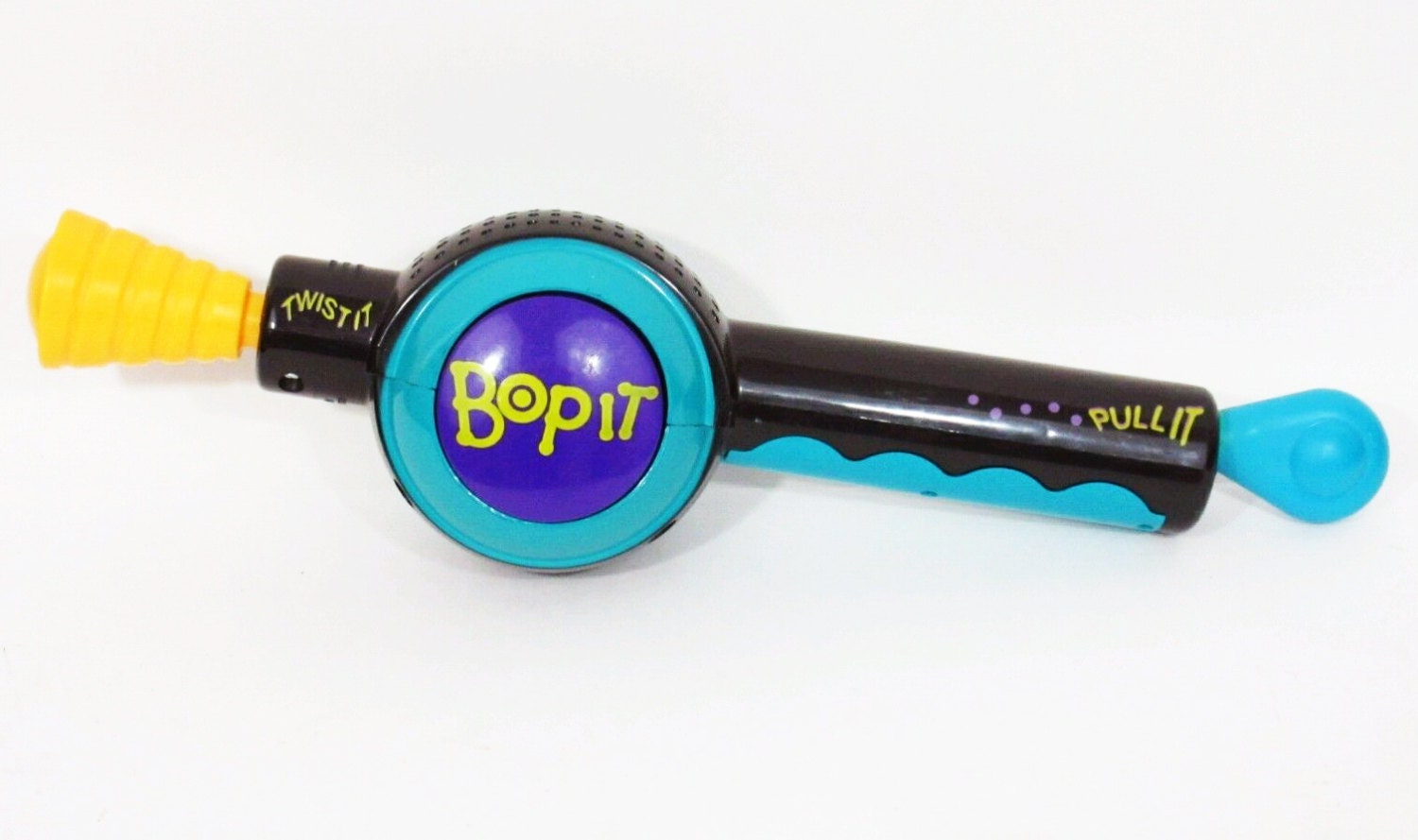
Anyways, I still like this song more than you do. I think it’s greater than the sum of its parts (or lyrics, no pun intended). I find listening to it pleasant in a childish way. It reminds me of zoning out at the Liberty Science Center at age ten, playing with a Bop It-esque interactive play station. Even the sounds I don’t like (the “UH!” and “AHH” ad-libs, which I think skew too pornographic for this stupid song) add to the general brain-melt of it all.
Realizing this song could also be used as a metaphor for this album—like, she went into it thinking she was going to make some epic pop album, but because she’s too d*ckmatized, it all devolves into complete mush. “Wood” into “Cancelled,” then, makes perfect sense.
TRACK 10- CANCELLED!
CD: I f***ing hate this song. I hate the swaggering, 2016-type beat. I hate the line “beware the crowd of masked crusaders.” I hate the line “did you girlboss too close with the sun” and how she rhymes that with “something wicked this way comes.” It’s hard for me to believe she hits all those garbage, cliché lyrics before the first chorus. This is really the songwriter who gave us I loved your hostile takeovers / encounters closer and closer / all your indecent exposures / how can you say that it’s… / I’ll build you a fort on some planet / where they can all understand it / how dare you think it’s romantic / leaving me safe and stranded? just two years prior.
I know this song is rumored to be about Blake Lively, who was semi-cancelled after a smear campaign against her by her co-star and director of It Ends With Us, Justin Baldoni. You and I have been texting a bit about the leaked emails between Blake and Taylor, and how Blake was likely sending ChatGPT-assisted emails to Taylor updating her on her legal troubles, and Taylor distanced herself. When Blake asks if all is well between them, Taylor says, “I felt like I was on a mass corporate email sent to 200 employees.” Was Taylor mad about the ChatGPT, or was she mad that Blake made her feel as though she was being CC’d on a bigger email—aka not special? I wonder if Taylor has taken into account that she has actually recorded an entire album that feels like a fake-cheery mass corporate email, which has, as of February 2026, sold 9 million copies worldwide.
The sound of this song bothers me so much more than the sound of The Tortured Poets Department, which I know bothered a lot of people. TTPD’s production sounded uninspired, but “CANCELLED!” just sounds dead-on-arrival stale. Also, I don’t know—similarly to how “Wood” begins with her crying over Matty Healy (assuming he’s Penny, which feels like a safe guess)—I can’t help but sense a bitterness around Healy on nearly every track of this album, and I think his shadow lurks around this one too. You can recall that Taylor caught a lot of flak for gallivanting around with him back in 2022—she even wrote “But Daddy I Love Him” about how mad she was that everybody was tsk-tsk-ing her for hanging out with a “cancelled person.” Now that she’s joined her own “cancelled” crew—her MAGA-loving KC Chiefs friends?—it feels as though the song is an attempt at reclaiming the “cancelled” identity from Healy. Think of how, when she and Joe Alwyn broke up, it was announced she was going to be writing and directing her own film, which perhaps reframed that breakup as her creative ascension. Or the way she aped John Mayer’s blues structure for “Dear John” as an “a-ha.” I’m not saying “CANCELLED!” is an explicit reference to Matty, but psychologically, I can’t help but think that she’s embracing DGAF-ing about the “Sarahs and Hannahs in their Sunday Best,” and hoping he approves from afar.
Also, this being Travis’s favorite song on the album articulates just how dumb he really is.
The one line I sort of like is “Tone deaf and hot? Let’s fucking off herrrr”—but yeah, maybe let’s.
KbY: I’m surprised Bari Weiss hasn’t interviewed Taylor for 60 Minutes about this song and how important it is. Yes, I agree; you can find at least one small redeeming feature in every other song on this album, but “CANCELLED!” exceeds the other bad songs in all of their bad qualities while also having additional bad qualities uniquely its own.
This song is like something from a comedy sketch sending up Reputation. Or a song that, like, a tween Rep girlie would compose and perform for a school talent show, and her own friends would make fun of “welcome to my underworld” behind her back for the rest of their lives. There was a time, starting around the release of folklore, when I wasn’t totally embarrassed to admit to having an interest in Taylor’s music. “CANCELLED!” on its own has not only completely erased that progress but actually made Swiftiehood more embarrassing than it’s ever been.
What’s really striking about “CANCELLED!” is that it shows no comprehension of the meaning that the concept of “cancellation” has in contemporary American popular discourse. Not only does she seem somehow genuinely oblivious to the right-wing political valence of grievances about “cancel culture,” but I do not think there is anybody else in the world, of any political persuasion, who understands “cancellation” in the way that Taylor does in this song. According to this song, these are things for which people are “cancelled”:
-girlbossing too close to the sun
-having far too much fun
-making a joke only a man can make
-being too smug
-bringing a tiny violin to a knife fight
Slight digression—I’m not sure what it means to “bring a tiny violin to a knife fight.” Does it mean you mocked someone’s sadness and suffered backlash? I think this song does have something to do with Blake Lively, because, in those leaked emails, Blake Lively refers to a paragraph about her trauma from Justin Baldoni as “violin heavy,” which makes me suspect that Taylor and Blake have some kind of “inside joke” around the “tiny violin.” If so, maybe this line is less inscrutable to them.
Anyway, that aside: if “CANCELLED!” were one’s introduction to the phenomenon of “cancellation”, one would come away with the impression that the “cancelled” are typically hot, successful women and the “cancellers” are typically misogynistic men who can’t stand that these women are joyfully liberated. Now, to me—and, I think, most other people on earth—“cancelled” has almost the exact opposite connotation. When I think of cancelled people, I think first of all, of Neil Gaiman, Louis CK, Marilyn Manson, Kevin Spacey, Aziz Ansari, the adulterer from the “Try Guys,” and, yeah, Matty Healy—that is to say, male abusers, sex pests, and creeps. Post-MeToo, I think the concept of “cancellation” is fundamentally bound up with that movement: for example, I would certainly say Johnny Depp was (deservingly) “cancelled,” but I wouldn’t think to describe Amber Heard’s harassment by online mobs as “cancellation,” just as you wouldn’t see Gamergate described as an example of “cancel culture.” Likewise with Blake Lively—I think what happened to her is accurately called a “semi-“cancellation at best, because, as you say, it wasn’t organic, it was an astroturfed smear campaign, and I believe public opinion ultimately will side with Blake over Justin Baldoni, who will probably end up rightfully cancelled. But at least he will be able to take solace in Taylor’s song!
As far as “cancelled” women go, aside from people like Ghislaine Maxwell and Kathryn Ruemmler, the first who come to mind are academic “pretendians,” white women who built careers on a false claim of indigenous identity. In what instance has a woman ever been “cancelled” for “making a joke only a man could”? I can’t recall any. If we replace “man” with “black person,” though, this line suddenly aligns perfectly with a common complaint among critics of “PC culture.” I’m not suggesting that Taylor was consciously or subconsciously thinking “why can’t I say the word” when she wrote this, but it does speak to her failure to comprehend, or at least to be honest about, an essential factor in her own 2016 “cancellation.” Kim crafted a narrative that cast Taylor as a historical type: a white woman who falsely portrays herself to be sexually victimized by a black man. This is the story of Emmett Till and Dick Rowland. The quintessential pretext for the lynching of black men was an accusation of sexual aggression toward a white woman, “aggression” often consisting of as little as an alleged touch on the arm or wolf whistle. #TaylorSwiftIsOverParty is not properly comprehensible without this context, but Taylor seems to have never reckoned with it. She is living in a world where her cancellation was purely an expression of misogynistic envy and malice, excluding the possibility of reasoned outrage at how her perceived lie replicated the logic of white supremacist violence—actual mob violence by actual “masked crusaders” that actually “offed” people.
It occurs to me now that there is one person whose idiosyncratic worldview somewhat corresponds to the ideascape of this song, in which “cancel culture” is a weapon wielded against women by jealous men. That person, JK Rowling, happens to be the fourth wealthiest female celebrity in the world, right behind Taylor. “ThEy’Re tHe oNes wItH mAtChInG sCaRs….”
CD: To say a bit more about “CANCELLED!” yes, from the moment I heard this song I knew I could never publicly identify as a Swiftie ever again. What Showgirl has brought to the light for me is that there is such a thing as being “too cringe.” I feel as though I am always quoting Taylor’s NYU Commencement Speech from 2022, during which she says “Learn to live alongside cringe.” She meant that as like, lean into your genuine self, don’t worry if people think it’s lame or corny. But the “cringe” of “CANCELLED!” goes beyond the Self because as you said, it simply refuses to engage in the societal context of what being “cancelled” IS or HAS MEANT to our society— and it has meant a whole lot, it has essentially created the society we now live in. She’s the world’s biggest pop star borrowing colloquial, internet terms and directing them back toward her own life. She’s soo obsessed with the concept of herself as a Famous Person, yet she approaches the language of the people/the internet in this oddly transactional way, where she’s borrowing words from the collective brain without giving them a fresh perspective or insight or charge... as a true great songwriter or poet SHOULD do. Poets are meant to elevate language, and no such elevation is happening on this album, let alone this song!
Also is “CANCELLED!” the only ALL CAPS title in her discography? Ha, I’m realizing the only other one is the all-time abomination, “ME!”. I think “CANCELLED!” is actually maybe the worse song of the two. That’s really saying something.
Anyways... on to “Honey”.....groooooannnn!!!
TRACK 11- HONEY
KbY: Not sure I can think of anything to say about this one. Let’s see. This was actually the first song I heard from the album, I think it leaked early, and I remember thinking “uh oh.” I remember thinking “how did this make the cut for the album that you kept to 13 songs in the name of ‘quality over quantity’?” The song is about how Taylor used to dislike it when people called her “honey” and “sweetheart,” because usually they were insincere or passive aggressive, but she likes it when Travis calls her those things because he says them with love. She even sings: “you give it different mean-ing, cause you mean it when you talk.” I want to underscore what you said above: it is genuinely hard to believe that the same person who wrote TTPD wrote this shit album.
I do like the impressionistic image of “white teeth” in the bathroom. I like some aspects of the production as well—the kind of bright jazzy piano, and whatever woodwind that is at around 1:49, although I do feel the track is a bit overproduced. Too many ideas.
I can’t help but laugh at her vocal ad libbing over the last chorus on this. Something about the passion she puts singing “HE LOOKED AT ME WRONG!!!” when the whole meaning of the line is that it doesn’t matter how he looked at her, and this is just the petty bullshit grievance of a “bitch” who called Taylor “sweetheart” and told her to “back off.”
CD: I’m with you on the production of this song— similar to “Wood” I find it has a Bop-It energy about it. I like the jazziness and the woodwinds, but yeah there’s a lot going on for such a straightforward idea which is: you can call me honey if you want, because I’m the one you want!
As the second to last song on the album, by the time we get to it, I feel as exhausted by the theme of Travis saving her by being nice to her. At this point I’m just like, God Bless babe. People were mean to you, and Travis was nice. “Graffiti my whole damn life- honey“ is a really bad line. So is this shit:
Honey, I’m home, we could play house / We can bed down, pick me up / Who’s the baddest in the land? What’s the plan? / You can be my forever night stand
These lyrics remind me of some from “Call it What You Want” off Rep:
I’m laughin’ with my lover, makin’ forts under covers / Trust him like a brother, yeah / You know I did one thing right / Starry eyes sparkin’ up my darkest nights
In both she’s combining sexy time with this childhood make-believe language (“who’s the baddest in the land?” makes me think of “who’s afraid of the big bad wolf,” or fairytales????)... she does tend to write like this when she feels safe and comfortable in a relationship. I mean it’s not weird or pathological, I think that’s how everybody feels in a safe and secure relationship, but then she follows it with “you can be my forever night stand” -- I guess that’s supposed to signal endearment. Are “one night stands” genuinely positive though? I feel like “one night stands” have a bit of a negative, or if not, neutral connotation. She said “one night stand” not like, I don’t know, “midnight rendezvous.” A forever night stand sounds tortuous, like hell, a living nightmare...
Yes “White teeth” is impressionistic and strange and I like that line. I also like what she does with her voice on “wrooooooONG.”
Also in this song her evergreen underdog posturing shows up loud and proud. She has been SO famous and powerful for YEARS now, when was the last time someone called her “sweetheart” or “honey” condescendingly? I’m not even kidding, who would dare?
TRACK 12- THE LIFE OF A SHOWGIRL (FT. SABRINA CARPENTER)
CD: This f*cking song. Umm... the boom clap beat reminds me a lot of Beyoncé’s “Halo,” which conceptually doesn’t make any sense to me, what would be the thought behind that? I think that by inviting Sabrina on this track, she accidentally self-owns herself, because why would you invite your protegé to do her thing on a concept album you created to essentially ape her?
For all the storytelling she promised on this album, and for all the storytelling that is lacking, uh, she sure does do a lot of storytelling on this song. But in terms of character development, place, time, setting, it’s an absolute, incoherent mess.
So I guess TLOAS it’s from the perspective of a younger, up-and-coming star who meets her idol, a seasoned showgirl. “Kitty” is the seasoned showgirl’s name, and she made her money being “pretty and witty,” but they said she didn’t do it “legitly,” which isn’t supposed to make you wonder what exactly they’re questioning was not “legit” (good time to remind everybody that Taylor’s dad bought 40,000 copies of her debut album so it could chart) it’s just supposed to make you think “Wow, hatersssss.”
The song would make more sense if Taylor played “Kitty” and Sabrina played “not Kitty” but in the recorded version of the song Taylor sings the first verse-- which is from an omniscient perspective talking about Kitty- and the pre-chorus, which is the perspective of the younger girl. And then Taylor also sings the first chorus, which is from Kitty’s perspective. THEN, Sabrina sings the second chorus, which is in third person about the other girl, the not-Kitty. I think? Or is it about Kitty? Whoever it’s about, it’s my least favorite part of the song:
She was a menace / The baby of the family in Lenox / Her father whored around like all men did / Her mother took pills and played tennis
I wish this painted a clear picture of a human being and their circumstances, but I get confused at the diff class signifiers going on here--- “her father whored around” feels trailer trash-y, but the pills and the tennis feels wealthy WASP-y? This is what I mean by poor character development. Anyways, then they sing the rest of the song together— further muddling the storytelling. There was a way to write this song so that Taylor plays Kitty and Sabrina plays the newer girl, but the POVs are all over the place. Realizing anything fun about this song goes up in flames under a microscope.
The line But I’m immortal now, babydolls / I couldn’t if I tried… would hit harder if songs like “Who’s Afraid of Little Old Me” and “Clara Bow” and “Nothing New” didn’t already exist.
Fine, I’ll give the song one compliment: the bow-out ending. It sounds like they’re using footage from the Eras Tour. The Eras Tour— the event that supposedly inspired so much of this album— barely surfaces on this body of work until now, the very end, when it’s referenced in the most obvious way possible through a burst of crowd noise.
TLOAS, the song or album, do not deserve such a passionate standing ovation, but the Eras Tour did. The moment leaves me with the strange sensation that Travis Kelce may be Taylor’s rebound not from Matty, but from the Eras Tour itself. As we’ve discussed, this album isn’t her processing the Eras Tour... that would be TTPD. This is just Taylor’s hungover, existential cope.
KbY: It’s funny you mention Beyoncé, because from my first listen this song has always brought to mind her husband Jay-Z, specifically Nas’ line in “Ether” about Eminem’s [“Renegade”] feature on The Blueprint. Sabrina murdered Taylor on her own shit.
You might remember that, way back when we were discussing whether the leaked TLOAS track list was authentic, the one thing I questioned was whether Taylor would share an album closer with a featured artist. Of course, now that I’ve heard the song, it makes perfect sense, as this is all about passing the baton. It kind of feels like that show Succession, as we’ve had a few candidates for “The Next Taylor Swift” come along—and Taylor has been all too happy to play into that framing of her younger colleagues’ work—but when she finally chooses an heir, it’s like, “Oh? Really? Okay, I suppose...” That Taylor seems so diminished here is to be expected, because the song designates as her successor someone who has succeeded largely by not being like Taylor Swift. You make a good point that, while we don’t see much of an interest on Sabrina’s part in imitating Taylor, this album shows us almost the opposite, and the result is fairly pathetic. I can’t help but hear a tone of dismissiveness and even condescension in Sabrina’s “I love you Taylor!” as the track fades out; it’s as though Taylor is grandly bestowing upon her this elaborately-woven mantle of the pop star as rhapsode and auteur, and Sabrina just shrugs, like “is it that sweet? I guess so.”
I agree that the song is a mess. It’s stretched too thin between the three goals of telling the story of the imaginary Kitty the showgirl, exalting Taylor’s legacy, and appointing Sabrina as the steward(ess) of that legacy. What’s baffling is that I think Taylor knows on some level what went wrong; this track and the album have the same title because she has crammed into these four minutes what is supposed to be the concept of the entire album. Over a whole album, the characters and ideas rendered so thinly here would have had proper room to breathe.
Taylor’s songwriting has been moving in the direction of an actual concept album for some time now. She even pretended to have written one in the lead up to Midnights. To explore narrative and fiction is a natural evolution for her in many ways, neatly uniting her history in country music with the “literary” image she continues to cultivate, and allowing her a wider pallet than her own increasingly boring life. Why did Taylor give us this album instead? Maybe she was simply more interested in lashing out at her various enemies for the zillionth time, trying to convince us that she’s totally not deeply insecure about middle age, and demonstrating her knowledge of common superstitions. Maybe she was so physically and creatively exhausted that even her judgment and taste suffered. Maybe, on some unconscious level, she wanted to test what we would let her get away with. Maybe all of the above.
A willingness to take meaningful risks is a necessary condition of artistic greatness in our time. I credit Taylor’s prodigious success partly to how she combines this trait with its exact opposite. She takes big swings, but usually only when she feels cornered—much like a snake, come to think of it! The narrative of her career that Taylor offers in her infamous (to us two at least) “Woman of the Decade” speech is a narrative of tug-of-war with her audience: “You’re saying my music is changing too much to stay in country music? Here’s an entire genre shift…Now I’m being cast as a villain to you? Here’s an album called Reputation,” and so on. Of course, she would have us believe that she’s broken this cycle, but “old habits die screaming,” especially since the behavior in question has only ever been rewarded. Even in folklore we see this reactive pattern—tonally and conceptually, it was the kind of album that many people, including myself, had been asking her to make for years. The “eras” concept itself reflects this dynamic. Unlike in actual historical periodization, whose “eras” or “ages” are (or ought to be) just epistemological conveniences, each new Taylor “era” is imagined as a clean and often radical break with the past; the opening of the ME! music video, with the snake exploding into butterflies, epitomizes this. This ceaseless cycle of self-reinvention is spectacular to watch, but is it actually sustainable? Is there something unhealthy about it?
This is why TTPD’s “But Daddy I Love Him”—whose style recalls earlier eras—is such a deceptively deep song. It raises the crucial question of what Taylor Swift really wants and whether we want her to have it. It holds us to account for the ineluctable coercion of our gaze, as Taylor reminds us of what she, in her role as our artistic “mirror,” allows us to escape: the sight of our own faces. The sad irony is that the “destiny” for which Taylor declared she would “burn [her] whole life down” was a literal dirtbag who ghosted her in front of the entire world after two weeks. As she succinctly puts it on Opalite, “I was wrong.”
All of that is to say that it’s hard not to think of this album in terms of a rebound, and, more broadly, in terms of the reactive attitude that has shaped her career. I’m reminded of a quote from Taylor’s 2013 interview with Vulture: “When I’m 40 and nobody wants to see me in a sparkly dress anymore, I’ll be, like: ‘Cool, I’ll just go in the studio and write songs for kids.’” As forty—the prime of life according to the Qurʾān—rapidly closes in on us, it seems uncertain whether Taylor will be able to find the third option between giving up singing her own songs and never growing old, which would be writing songs that are actually for her almost-forty-year-old self. The creative impulse is obviously multifaceted and impossible to reduce to any single abstract motive, but I’d suggest that great art often emerges from a drive to make the self appear to the self. With a few small, partial exceptions, the songs on The Life of A Showgirl are directed toward self-concealment: “You don’t know the life of a showgirl babe, and you’re never ever gonna.” And, as you pointed out, to whom does the song have her address these lines? Herself!
Although an end to Taylor’s empire is hard to imagine, I do feel that she stands at a point of decision that is, like you said, existential, in a way. The only path forward lies beyond the wheel of artistic samsara to which Taylor has chained herself (“all I think about is karma”). Of course, we can’t assume that freedom from the cycle of eras and from her obsession with the expectations of others would necessarily lead Taylor to make good music, but it would allow us to hope for it. The Life of a Showgirl, an album that ultimately celebrates objectification as “immortality,” portends a bleaker future, in which the snake swallows its own tail and the reactive principle of Taylor’s karmic Weltanshauung ossifies into a principle of reaction in the full sense. Given that Taylor has as yet refused, unlike many of her peers, to make any statement on the current political moment in the US, even as she asks us to care about a video that manages to be unworthy of “Opalite,” I’ll grant that TLOAS does, in one key way, capture the experience of attending an early twentieth-century musical revue: you are listening to the insipid, delusional soundtrack to a slow slide into fascism. ✪
How could you do this to us on a Tuesday!?