
Blonde Affairs: Garden State (2004)
On the only living boy in "New York"

Welcome to Blonde Affairs—a new recurring dispatch from the AB Office of Emergency Management, where we briefly cover a single blonde (“blonde” defined here) whose recent moves have rendered them a matter of civic relevance.
Blonde Affairs will hit your inbox on Saturday mornings from here on out.
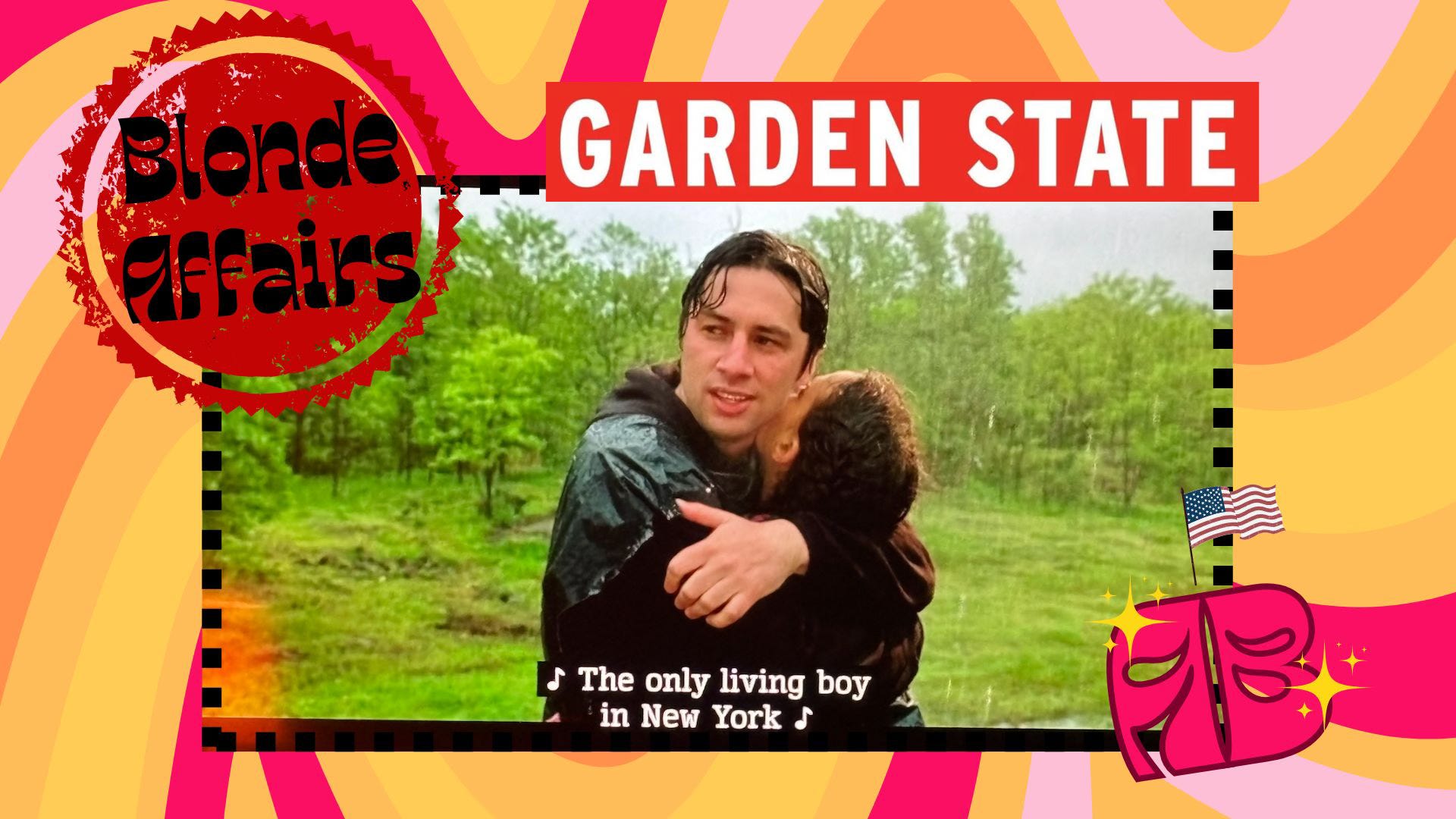
Garden State is of civic relevance because it’s part of the Criterion Channel’s smartly-timed “Family Reunions” collection… but is Garden State blonde? Yes, of course. It’s from 2004, and written and directed by Zach Braff.
Dusty and I watched Garden State the Wednesday before Thanksgiving. I’d never seen it before. How? All I do is talk about how great the state of NJ is every day of my life. But in high school I automatically hated anything popular. Like, I shipped off to NYU without ever voluntarily listening to The Strokes…
In Garden State, Zach Braff plays Andrew “Large” Largeman, a struggling actor who flies back to New Jersey after his paraplegic mother drowns in her jacuzzi bathtub. After her funeral, his dad suggests he see a neurologist. His inner life is muted from all the Lithium — he’s wading through his grief, he’s getting cluster headaches. He meets Sam (Natalie Portman) in the doctor’s office waiting room and the Meme moment happens: she introduces him to The Shins, effectively “changing his life.”
Is this movie a The Shins opera? More on operatic art in December’s long post…
In the opening scenes of the movie we see Largeman serving annoying yuppies at a trendy LA Vietnamese restaurant, but in New Jersey, he gets to “be normal” with his hometown friends. He reconnects with Mark (played by Peter Sarsgaard, not related to the Skarsgårds, I finally learned), and gets closer to Sam. There is whimsy in the air: Sam, Manic Pixie Dream Girl Patient Zero, has a Discovery Zone-sized hamster playground in her home; another friend, Jesse, is rich now after inventing silent velcro, and lives in a McMansion so big you need a golf cart to get around. If this movie were made even three years later, Jesse would not be masturbating all day in an existential haze in South Orange— he would be out in San Francisco getting addicted to Modafinil.

Halfway through the movie, Large removes a psychic knife from his brain by revealing something horrible: he’s sort of responsible for his mother’s death. She’s in a wheelchair because, when he was nine, he pushed her and she tripped over a dishwasher door. Brutal. But now that his dark secret is out in the open, he can start to heal.
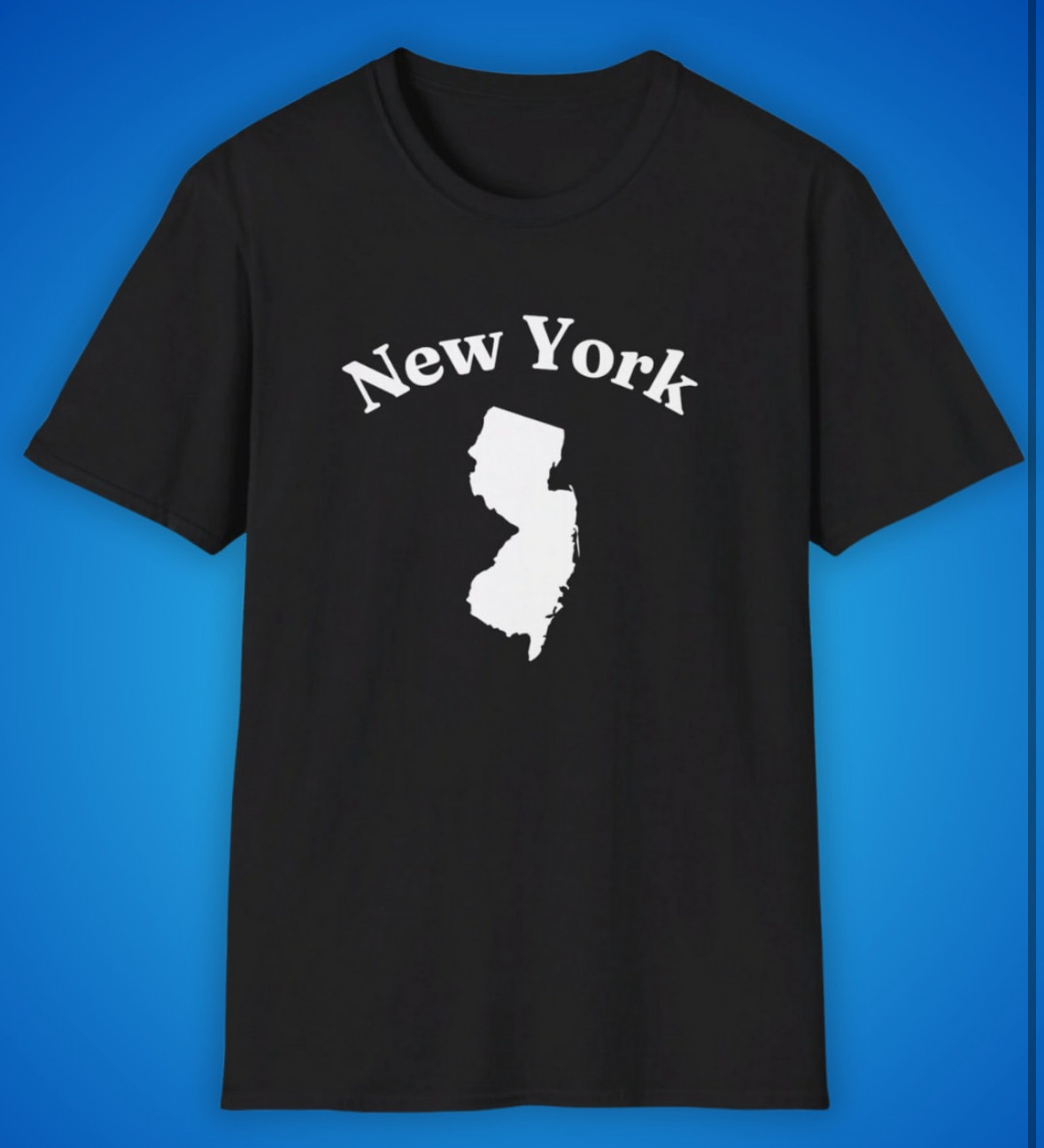
The movie’s Great Scene is when Large, Sam, and Sarsgaard go to this soon-to-be-flooded quarry in Newark to visit a man in a trailer fashioned to look like Noah’s Ark. Twee alert! He is a simple guy with two purposes in life: explore the quarry, and protect his wife and baby. Braff’s character, inspired by this guys’s conviction, cringily scales a digger and screams into the void below. Sam and Sarsgaard follow. Then Zach and Sam start making out while Simon & Garfunkel’s “The Only Living Boy in New York” plays. Finally, a cinematic moment that reminds me of this perfect shirt:
People always say this movie has nothing to do with New Jersey, that it could have been set anywhere, but they’re wrong, it actually has everything to do with New Jersey. Until the quarry, the suburbs are shot in a washed-out palette that mirrors Largeman’s interior emptiness— his own childhood home, sleeker and more modern than his hometown friends’, is the starkest example of this type of recently-renovated, always-developing hollowness. There is a richness in returning to the source of the emptiness, because the flatness is what his character needs to confront. The quarry is about to become a mall, and Zach Braff’s character is an aspiring actor— is Large not, in a sense, the mall being built over the quarry?
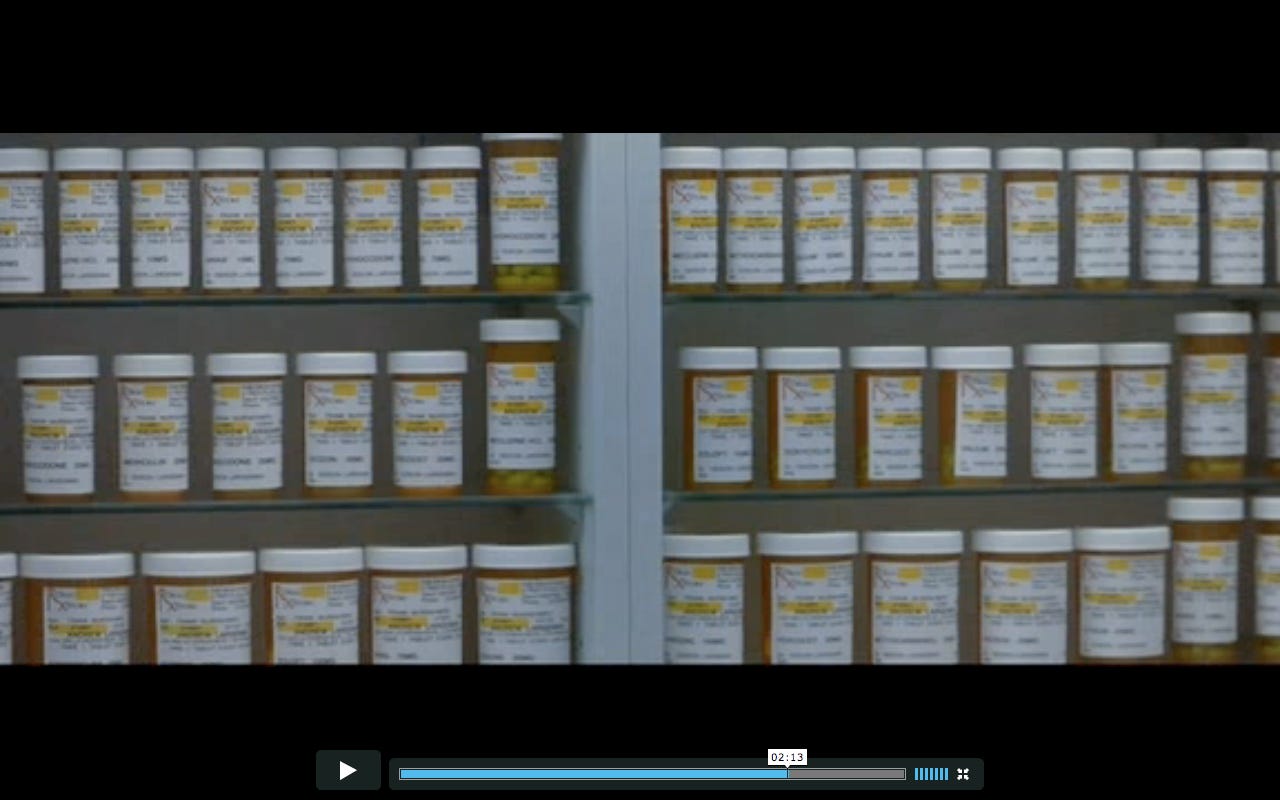
When you see all of Large’s pills at the beginning of the movie, you know this will be a story about how numb everyone was feeling in the early 00s, how disconnected people were from each other. Two decades later, it all feels very innocent coming just before the opioid crisis that would rip through these exact suburbs, and the invention of the iPhone. The dependency was only just beginning: there isn’t a single cell phone in sight at the house party Large attends. Just some ecstasy-cocaine-spin the bottle childsplay. Gen X shit!
Since Garden State is where the Millennial Urge for the Sincere began, it’s an interesting movie to watch now, after the baton has been passed from Millennial cringe to Gen Z’s signature hyperawareness, where everything is being felt/performed/dismissed at the same time. I saw Wake Up Dead Man in theaters on Thanksgiving, the new Knives Out and by far the best. Wake Up Dead Man felt almost boomer-ish to me in its plea for people to find meaning and faith again. Until I realized oh nooo, those aren’t boomers talking, that’s us millennials. I think they (we) are on to something— that there is value to be found in flat, anonymous expanses, in suffering and in boredom. ✪
Much wisdom in here, thanks for another Saturday dispatch banger!