
It is possible to enjoy MELANIA
if the present world is the limit of your imagination

*DISCLOSURE: I did not support this movie— I bought a Marty Supreme ticket at the Regal Essex and snuck in to a different theater to see Melania.
The first sound you hear is the roll of the ocean. The second is yacht rock. A drone shot glides over turquoise water crashing onto the shores of Mar-a-Lago. Sub for Calabasas, and this is exactly how Keeping Up with the Kardashians— its Hulu-era incarnation— opens.
Melania gets into a black car, close-up on her leopard print Louboutins. Safely inside, she removes her sunglasses. She’s going to the Palm Beach airport— the Trump company plane is waiting for her. From the car to the plane, she puts her sunglasses back on. The inside of the plane is as gilded as you expect. Sunglasses come off again.
“Happy new year,” are the first words Melania Trump speaks, to the crew. There’s a Trumpinator bobblehead on the dashboard of the cockpit.
“Billie Jean” by Michael Jackson plays over the credits as the PJ takes off.
I imagined this Melania beginning off the top of my head.

Just kidding, I didn’t. That’s actually how the documentary, produced by Amazon Studios, begins. But the point I’m trying to make is that I could have easily come up with the same opener. Melania exists in service of the (gilded) ceiling of the American imagination.
Melania is fascist propaganda, probably the first of many films to be produced by Amazon for this administration. I also think that Melania Trump genuinely believes that, through this documentary, she is Speaking her Truth.
The film is a document of her life in the twenty days leading up to Inauguration Day 2025. Many will watch Melania and feel sympathy for this woman, whose mother’s death and whose husband’s megalomania are used as her impetus for finding meaning in her second rodeo as First Lady. Many will watch this and see a woman stuck in a loveless marriage who, against all odds, remains committed to her philanthropic causes and “serving cunt” through it all—and find that this alone is enough to root for her.
When we see a glamorous woman being vulnerable in front of cameras, we are supposed to eat it up. This is what director Brett Ratner is banking on with this truly stupid movie. It’s glossy reality television that will appeal to women who can relate to her gilded plight, or at least, see a version of their own plight within it. This documentary is her Cope for the position she’s found herself in— First Lady of either the Weimar Republic or the Nazi Regime, it’s still TBD on which.
(I’m going to use the term “gilded” to describe the interiors in this film, because there is nothing distinctive about any of it— it is exactly what you imagine when I say “gilded.” We all live in the United States, we saw what Trump did to the Oval Office, we don’t need further description.)
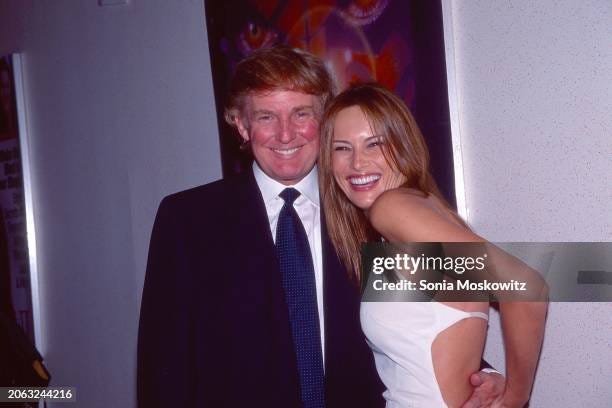
“She was a model. Which is fantastic, because we speak the same language,” the tailor says.
This is the very first thing said about Melania on camera. This is during a fitting– she is requesting adjustments to the suit she will wear at one of the inauguration events. She is beautiful, a woman of taste, who knows garments, who knows what adjustments need to be made to the suit in order for it to look good. After the fitting, she meets with an event planner to design a candlelit inauguration-night dinner.
In voiceover, Melania says: “My education in architecture gives me a specific design talent.”
Words like “education” and “specific” are meant to signal knowledge and vision. (After graduating at age nineteen, her Wiki states, Melania enrolled in the Faculty of Architecture and Civil and Geodetic Engineering at the University of Ljubljana to further study design, leaving after a few months without finishing her degree.)
The event planner shows her the “beautiful shades of greige” that will be incorporated into the table setting designs. “Beautiful shades of greige” is a real quote that is uttered but I could not, for the life of me, gather if it was genuine, or a troll. O beautiful, for spacious skies, for Amber waves of greige…
“White and gold— I mean, that’s you,” the planner says to her, showing her the gilded napkin designs. Not twenty minutes later, she says to another member of The Help– they all scan as The Help, she’s comes off like a Monarch— “Very my colors— black and white.”
“That’s you,” The Help responds.
White and gold— that’s her. Black and white? Also her.
In voiceover, Melania says: “What you have seen today is the result of that meeting.” But what we’ve seen is the meeting, not the results of it. This voiceover is meant to highlight her executive function. She has a vision, she has a meeting, and the results of the meeting are that her vision will be implemented.
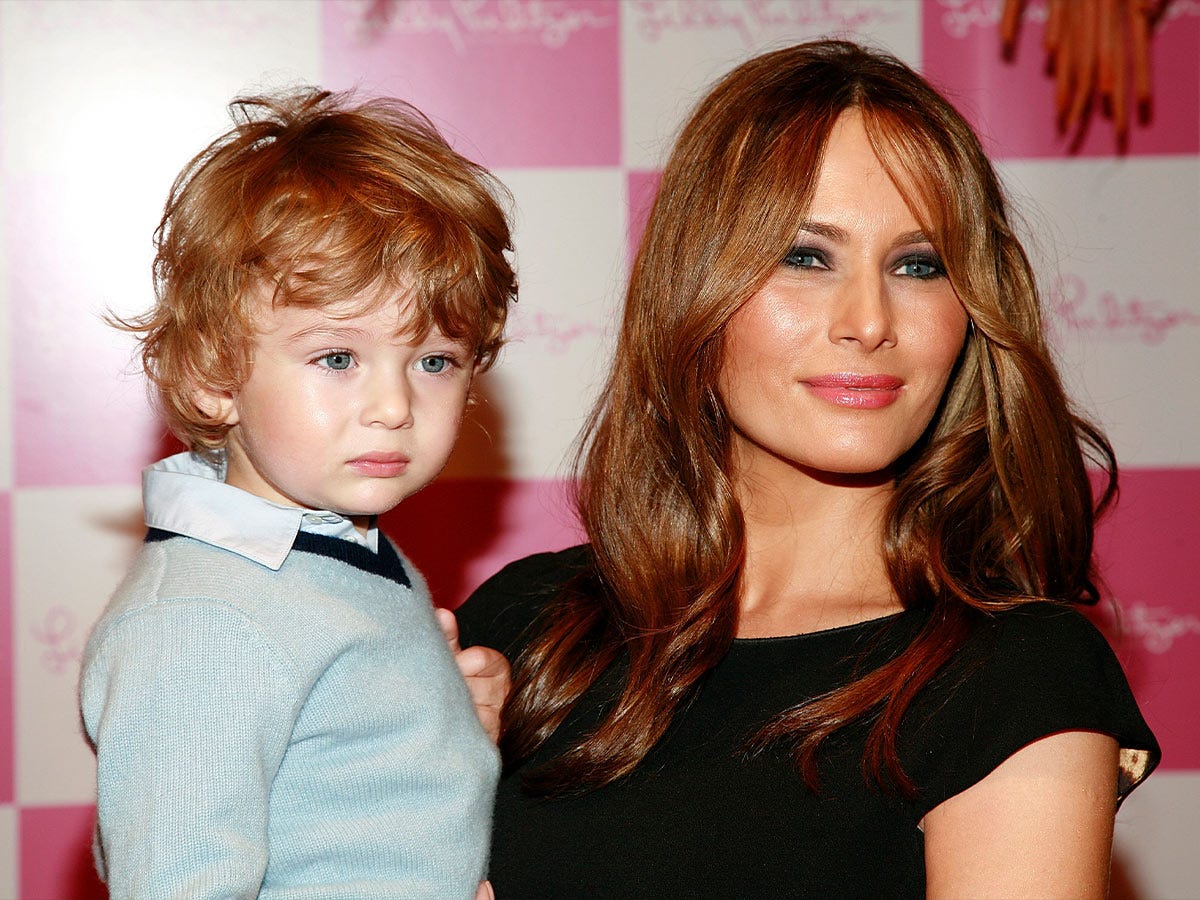
When President Jimmy Carter dies unexpectedly (on the one year anniversary of her mother’s death, from which she is still reeling), we see Melania meet her husband in DC for the funeral. We see them get into the same black car, and she asks him if he talked to Barron this morning. Donald says yes, and it sounds like Melania is catching him in a lie— she must have spoken to Barron herself and knows this is not true.
“He’s cute, we have cute conversations,” Trump says, after she calls him out.
“Yeah I love him. An incredible mind,” she responds mindlessly.

After Carter’s funeral Melania flies to New York to visit an empty St. Patrick’s Cathedral decked out for the holidays. The poinsettias filling the altar look almost identical to the way the greenery fills her “vision” for the candlelight dinner in the final scene. I found an approximation above, but I guarantee that the poinsettias in the film were set up and paid for by production.
She meets with church staffers in their offices after lighting a candle for her mom.
“She came here often,” she says to them, about her mother.
“She did?” One of them asks.
“Yeah. When she was in New York.”
“It’s a comforting place for a lot of people,” the deacon replies.
Melania is a profoundly lonely woman, but surprisingly, she has a friend in Brigitte Macron.
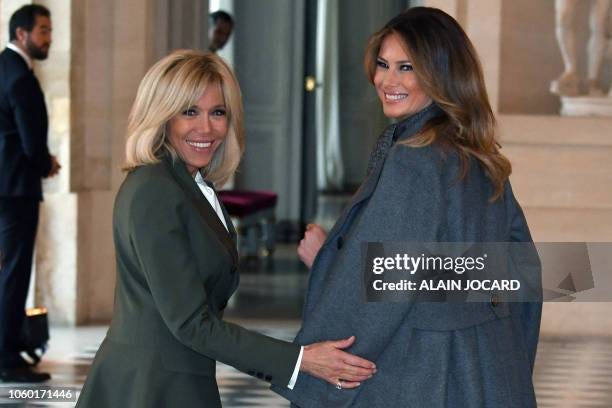
Melania meets with two peers in this documentary; the first is Brigitte Macron via Zoom, and the second is Rania Al Abdullah, Queen of Jordan. Both meetings are about BE BEST, Melania’s cyberbullying initiative she started in 2016, during her first White House term. She wants advice from Brigitte, who spearheaded something similar in France, about how to expand it in the US.
Melania wants to know if the cyberbullying initiative is working in France, Brigitte stresses the importance of not allowing young children to have social media.
NO PHONE UNTIL 11, Melania writes in sharpie on a Be Best notepad.
“You are very strong,” Brigitte says to Melania, then repeats it: “You are very strong.”
This is when I begin to understand that there is a Lemonade-esque subtext to this entire documentary. Melania can’t say outright that she is miserable in her relationship, but many hints are dropped.
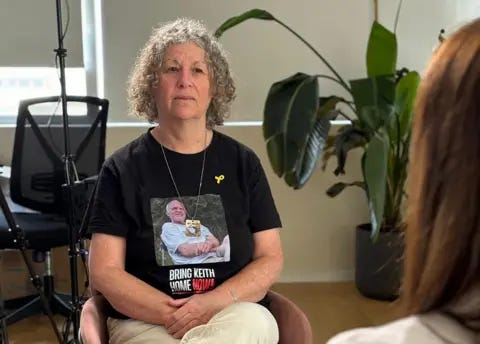
The camera zooms in on Melania tearing up watching footage of the California Wildfires, which is used as a transition to film her meeting with Aviva Siegel, an October 7th hostage who was released during a deal, but whose husband, at the time of filming, is still in Gaza. Melania doesn’t ask any questions, and Aviva seems prompted by producers to tell Melania her story. Melania commends her for supporting her husband.
Earlier in the documentary, we’re introduced to two assistants Melania “hires.” Like the overflowing poinsettias at St. Patrick’s Cathedral they feel more like stage decoration than real employees. In this scene they’re seated at a small enclave table, “taking calls” and sending emails on behalf of their boss. In one strange sequence, a PR representative phones to flag a Hollywood Reporter journalist who has questions about Melania’s $40 million Amazon deal. The assistants decide, in a “fuck the media” moment, not to respond to the journalist. Its placement, immediately following the October 7th scene, is unsettling.
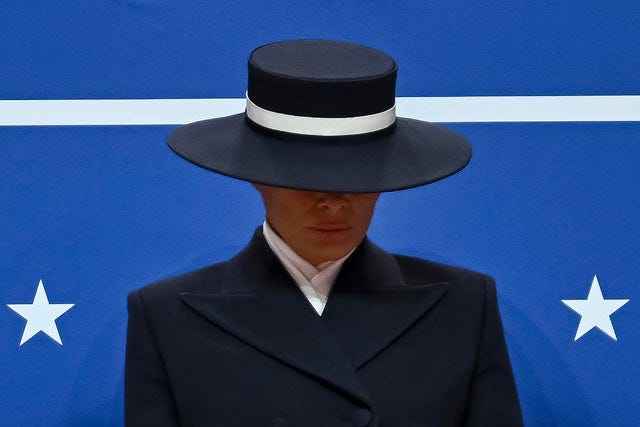
“My creative vision had met its final version— just as I imagined.”
We are now five days out from January 20th. I feel a pang of jealousy at a shot of her taking off the most buttery looking gloves, then stop myself. She’s arrived at another fitting. This one is for her “iconic” inauguration hat.
This is when time gets a little blurry and confusing. The documentary cuts to her being chauffeured somewhere again. In the car, a handler asks her who her favorite recording artist is. I think this is the beginning of a lightning round of questions to make her more “relatable,” but it’s actually a lead in to a Carpool Karaoke-ass scene, where we see Melania sing along to her favorite artist, Michael Jackson. She sings “Billie Jean,” makes a stank face, wiggles her shoulders.
After a few minutes of this, the handler blurts out incredulously, “I’m doing carpool karaoke with Melania!” Which I for some reason found extremely enraging— do they not realize how ubiquitous Carpool Karaoke is? Why bother naming the reference? Just how stupid do you think your audience is?
In the final days before the inauguration, the film wants you to feel that Melania is walking into a tomb— that the weight of the world is on her, but that her sense of duty to her adopted country is so strong that neither grief nor marriage to a manchild is enough to stop her. It’s meant to register as a job no woman would want.
“My goal as the First Lady,” she says in voiceover somewhere around here, is to “break all norms and elevate the position. Be a positive influence, and inspiring.”
This makes her pièce de résistance of Inauguration Day—the brimmed hat that obscures her face—the film’s central object as well. The final fitting we see is for the hat, confirming what much of the media coverage that day already suggested: that this accessory was, in fact, her grand rebellion.
There’s a strange interlude as she prepares to make her entrance at the Inauguration where she watches, through a mirror, the press coverage of the rest of her family. We then follow her up on stage, and the camera lingers on an image we’ve all seen already— of Trump attempting to kiss her, only to be thwarted by the brim of her hat.
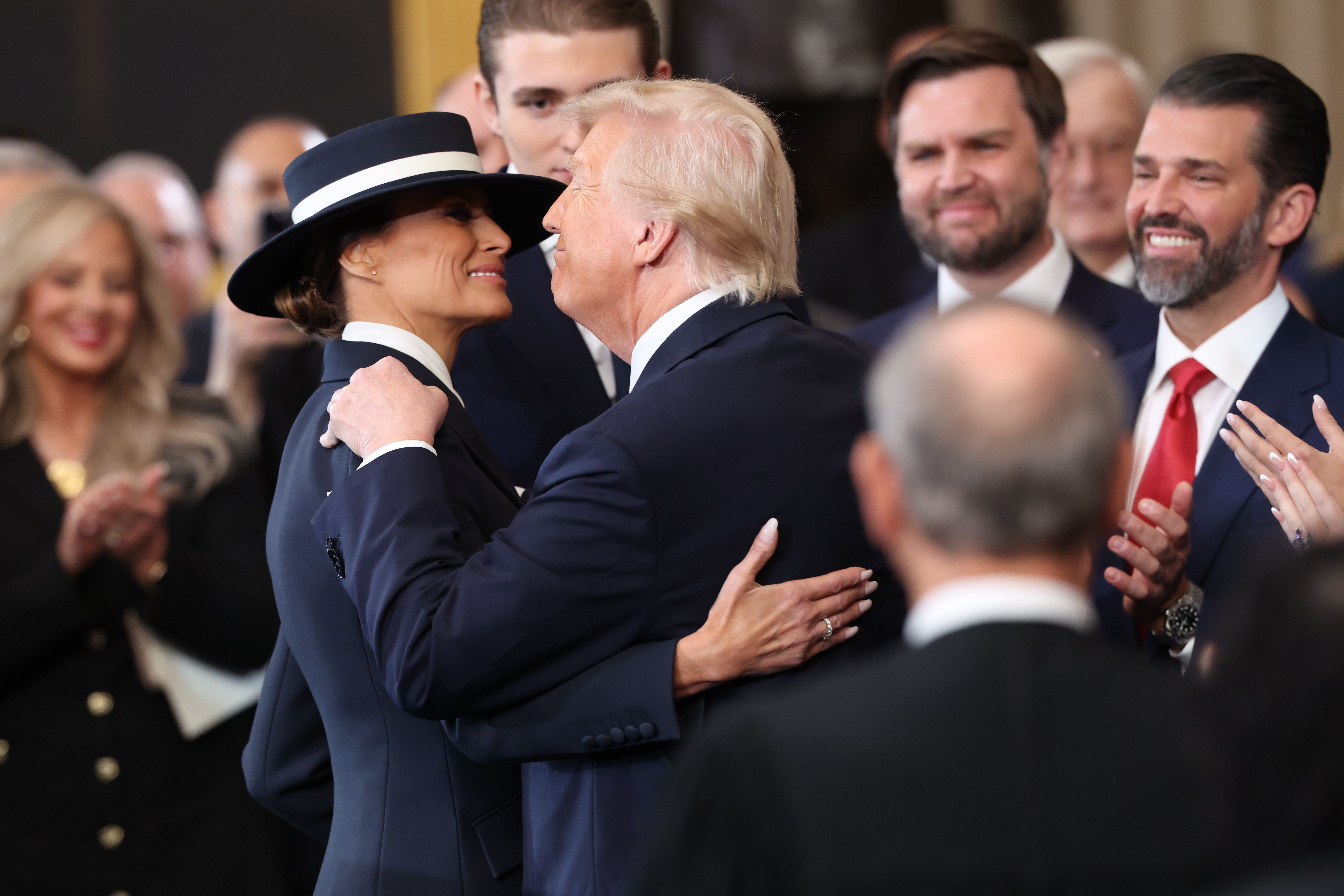
Did I think the hat was an interesting fashion statement? Sure. Did I find it chic? Yeah I guess. And they know I do. The American imagination is obsessed with aesthetic pleasure— this is what Ratner’s film banks on over and over, that viewers can value Melania’s commitment to decorum even as her husband sends ICE into American cities to terrorize and murder people. At this point you have to wonder: what is the difference between propaganda and pop culture? In Melania, the two become one.
If you’re not actively trying to unwire yourself from chic for the sake of chic, you may find yourself enjoying this documentary and sympathizing with the enemy. What Melania offers in exchange for that sympathy is a vision of helpless, masochistic endurance: stand by your husband, stand by your country, and serve cunt at all times. Her “creative vision” she invokes over and over is not creative, nor is it hers. A cool hat on a conservative woman means nothing at all. ✪
Great piece, killer final line. Thank you for enduring this so that no one else has to. Was there anyone in the theater?
what did the AI agent SAY